In the selection and application of high?power electric cylinders for high?temperature environments, many users overlook the special characteristics of high?temperature working conditions. They fall into pitfalls such as “experience?based selection” and “shortcut substitution”, which frequently result in equipment failures and production downtime.
Here are three mistakes you must never make:
This is the most common and fatal error. Core components of room?temperature high?power electric cylinders, including motor permanent magnets, seals and grease, are only designed for conventional environments ranging from ?20?°C to 60?°C. When exposed to temperatures above 60?°C, a chain of problems will occur: rapid demagnetization of motor permanent magnets, causing thrust to drop by more than 30?% in a short period; high?temperature aging of ordinary coil insulation layers, which easily leads to short circuits and burnout; dry friction between the lead screw and nut due to lubrication failure, with wear rates increasing by more than five times.
In high?temperature environments, ordinary rubber seals (e.g. nitrile rubber) age rapidly, harden and crack. They can no longer block dust and moisture ingress, leading to lead?screw corrosion in high?power electric cylinders. Conventional lithium?based grease softens and flows away above 80?°C and fails to form an effective oil film. Dry friction develops between the lead screw and steel balls, generating loud noise, component seizure and even unplanned equipment shutdown.
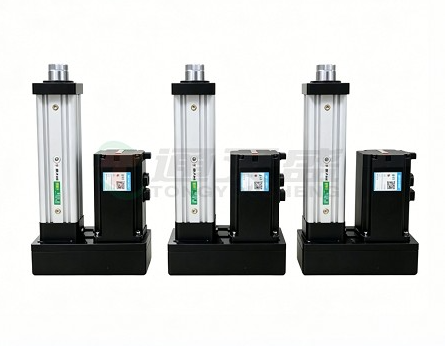
A more hidden risk is that high?temperature decomposition of grease produces sludge that clogs the lead?screw circulation circuit. Even after replacing with high?temperature grease, the sludge can hardly be fully removed, often requiring complete replacement of the lead?screw assembly and greatly raising maintenance costs. The correct approach is to select fluororubber or metallic sealing materials and use grease rated for the operating temperature. Both measures are indispensable.
High temperatures inherently degrade performance metrics such as motor torque and lead?screw load capacity of electric cylinders. Selecting units according to rated parameters for room?temperature conditions and running them at full load forces the equipment to operate under effective overload. For instance, the thrust of a high?power electric cylinder naturally decreases by 20?40?% at 120?°C. If the actual load matches the rated thrust, the motor will sustain long?term overload with continuously rising coil temperature, triggering overtemperature protection or burnout. The lead screw may bend or fracture when subjected to excessive loads.
Industry consensus dictates that safety margins must be reserved for high?power electric cylinders selected for high?temperature service. Higher operating temperatures require larger safety factors. A safety factor of 1.5 is required for 80?°C working conditions, and a factor of 2.5 or above for temperatures exceeding 150?°C. This is not “over?specification”; it is essential insurance against equipment failures.

Address: Room 601, Building 5, Liandong U Valley, No. 1330 Jinfeng South Road, Mudu Town, Wuzhong District, Suzhou, Jiangsu, China
Suzhou TongYouSheng Electronic Technology Co., Ltd. - An ISO9001 Certified Company All rights reserved. Privacy Policy


