


Industrial electric cylinders have become the mainstream linear?motion actuators for automated equipment. Nevertheless, many equipment manufacturers suffer from specification mismatches during the selection phase due to cognitive biases, resulting in operating jitter, insufficient thrust, accuracy degradation and shortened service life. These issues not only undermine equipment stability but also raise costs for subsequent modification and maintenance. Drawing on practical industry experience, sorting out common pitfalls and scientific selection principles for industrial electric cylinders can provide reliable references for equipment design.
A prevalent misconception among users is selecting products solely based on maximum thrust while overlooking dynamic loads and working?condition factors. The rated thrust of an industrial electric cylinder is a static theoretical value. Its effective output thrust will inevitably decrease under conditions such as high?speed reciprocation, variable loads and lateral forces. Without adequate load safety margins, continuous full?load operation will trigger motor overload and accelerated lead?screw wear, bringing about malfunctions like stalling and positioning deviation. A 20%?30% load safety margin is generally recommended for standard automated applications.
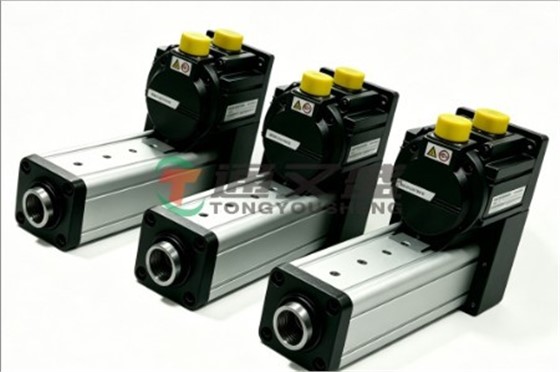
Improper accuracy specification — either excessive redundancy or insufficient performance — is another widespread problem. For ordinary conveying and lifting scenarios, blindly specifying high?precision servo electric cylinders leads to unnecessary cost inflation. Conversely, adopting economy?grade general?purpose electric cylinders for precision pressing or inspection processes causes mass defective products due to inadequate repeat positioning accuracy. Selection should align with actual process requirements. Ball?screw standard electric cylinders suffice for conventional working conditions, whereas closed?loop servo control systems shall be deployed for precision processes to strike a balance between cost?effectiveness and performance.
Furthermore, neglecting compatibility with operating environments and mounting configurations constitutes a major selection pitfall. In workshops with dust, moisture or oil contamination, electric cylinders without sufficient ingress?protection ratings tend to suffer from internal dust accumulation and corrosion, impairing transmission accuracy. Eccentric mounting or installation under lateral loads without proper mounting accessories aggravates wear on guide rails and lead screws, drastically shortening service life.
Scientific selection of industrial electric cylinders calls for comprehensive evaluation of multiple parameters including operating environment, travel speed, load conditions, accuracy requirements and mounting geometry, and rejection of single?parameter?driven selection logic. Appropriate specification matching and avoidance of typical pitfalls guarantee long?term stable operation of automated equipment, rationalize capital expenditure, and maximize the application value of industrial electric cylinders.