


As the core transmission component of industrial electric cylinders, the lead screw directly determines the positioning accuracy, load?bearing capacity, operating speed and service life of equipment. Mainstream electric cylinders on the market adopt three major transmission structures: trapezoidal lead screw, ball screw and planetary roller screw, which feature vastly different mechanical properties. Many equipment faults such as unstable operation, insufficient accuracy and load slippage stem from mismatched lead?screw specifications against production working conditions. Proper selection of lead?screw types lays the foundation for stable operation of electric cylinders.
Electric cylinders with trapezoidal lead screws realize power transmission through sliding friction. Boasting a simple structure and reliable self?locking performance, they can retain their position upon power failure without additional braking devices. Featuring moderate operating speed and cost?effective procurement, trapezoidal?lead?screw electric cylinders suit working conditions requiring low speed, light load and frequent self?locking. They are widely applied in general automation scenarios including lifting support, simple positioning, static pressure holding and light?duty pushing, ideal for equipment with moderate accuracy requirements that prioritizes stability and cost?performance.
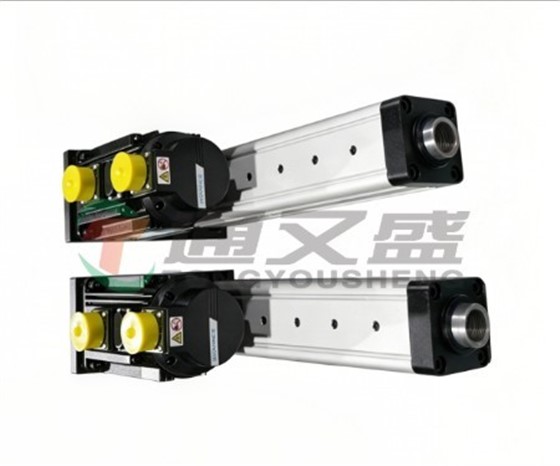
Electric cylinders with ball screws adopt rolling?friction transmission. With a low friction coefficient, high transmission efficiency and fast response, they represent the most widely adopted structure in the automation industry. Ball?screw electric cylinders deliver excellent repeat positioning accuracy and smooth jitter?free movement, suitable for continuous reciprocating operations at medium?to?high speed with medium?to?high precision. They perform reliably in 3C?electronic assembly, packaging & sorting, material transfer and routine inspection. Balancing accuracy, speed and cost?effectiveness, they offer outstanding general?purpose performance.
Electric cylinders with planetary roller screws constitute a heavy?duty precision transmission solution. They substantially outperform conventional screws in load capacity, with prominent shock resistance and fatigue resistance, enabling long?term high?frequency heavy?duty operation. Thanks to high structural rigidity and minimal deformation error, planetary?roller?screw electric cylinders are fit for heavy?load applications such as high?force pressing, material fatigue testing, heavy?workpiece fitting and high?pressure pressure?holding. They are extensively deployed in high?end industrial sectors including new?energy and automotive manufacturing as well as precision press?fitting, sustaining consistent process output over long service cycles.
In summary, trapezoidal?lead?screw electric cylinders are preferred for light?load self?locking conditions; ball?screw electric cylinders are the first choice for general?purpose precision automation; and roller?screw electric cylinders are suitable for heavy?duty, high?pressure and high?frequency working conditions. Matching the transmission structure to process requirements effectively improves equipment operational stability, reduces mechanical wear, and meets long?term service demands of diverse automated production scenarios.
请详细介绍一下梯形丝杠、滚珠丝杠和行星滚柱丝杠的特点。
如何根据生产工况合理选配丝杠类型?
电缸选型时需要考虑哪些因素?