Premature aging and failure of most electric cylinders stem mainly from improper load application. Long?term operation beyond rated thrust, insufficient safety load margin, and eccentric lateral force directly cause over?load wear on lead screws, balls and guide sliders. This leads to rapidly increased clearance in transmission pairs and continuous accuracy degradation. Compared with operation under rated load, slight sustained overload can increase cylinder wear rate by 2?3 times and greatly shorten equipment service cycles.
Uneven mounting bases, guide?rail parallelism errors and flange coaxiality offset of precision electric cylinders result in uneven force on the sliding table and excessive unilateral frictional resistance. Every reciprocating movement generates persistent abnormal mechanical wear. Cumulative damage over time causes partial lead?screw abrasion, slider wear and cylinder deformation. This represents a highly hidden source of service?life loss.
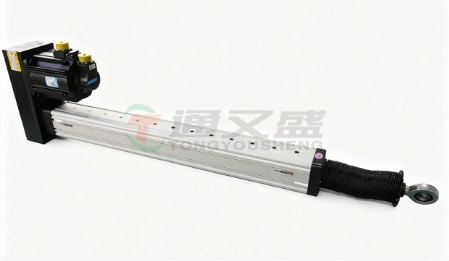
Poorly tuned servo parameters such as excessively short acceleration?deceleration time and overly high system rigidity create severe instantaneous impact during start?stop and direction reversal. Inertial shock damages transmission structures. Continuous operation at maximum speed and full stroke keeps motors and transmission components under permanent full?load stress, accelerating component fatigue and aging and reducing overall equipment service life.
Dust, oil contamination, humidity, high?low temperature and mild corrosion inflict heavy damage on precision electric cylinders. Dust particles entering lead?screw raceways produce abrasive wear. Moisture triggers metal corrosion and grease emulsification failure. High?low temperature expedites aging of seals, belts and lubricants, rapidly degrading transmission performance and sharply raising failure rates.
Core transmission components of precision electric cylinders rely on grease to reduce frictional loss. Failure to replace grease or remove dust contaminants over long periods forces transmission pairs to operate under dry friction. Consequences include local overheating, rapid component wear, stuttering and abnormal noise. Many units are scrapped prematurely not due to end?of?life hardware, but from zero routine maintenance.

Address: Room 601, Building 5, Liandong U Valley, No. 1330 Jinfeng South Road, Mudu Town, Wuzhong District, Suzhou, Jiangsu, China
Suzhou TongYouSheng Electronic Technology Co., Ltd. - An ISO9001 Certified Company All rights reserved. Privacy Policy


